V-Ray for SketchUp
Cloth
This page provides information on the V-Ray Cloth Texture.
Last updated 1 September 2026
This page provides information on the V-Ray Cloth Texture.
Overview
The Cloth texture map can be used to generate a procedural cloth texture. It gives a high level of control making it an easy matter to produce the look of a loose or close weaved cloth. It also allows control over the amount of random weave distortion and its channels can be connected to texture maps


UI Paths
||V-Ray Asset Editor|| > Textures (right-click) > Cloth
||V-Ray Asset Editor|| > Create Asset (left-click) > Textures > Cloth
Parameters
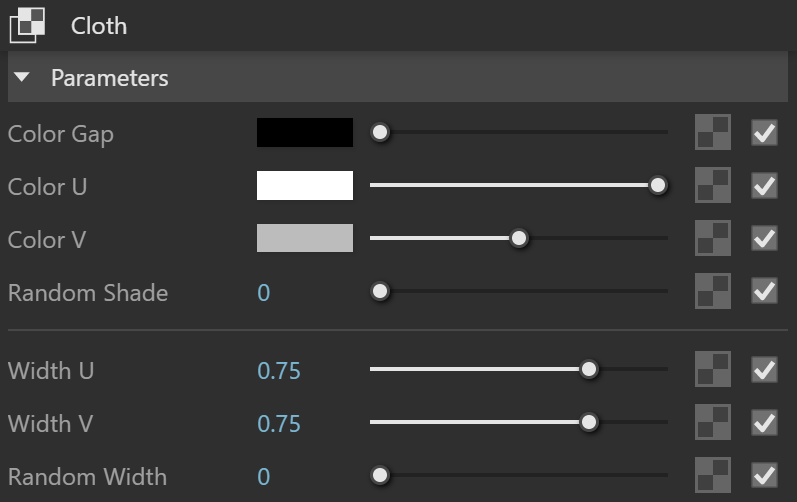
Color Gap – Controls the color of the gaps between the fabric fibers. When a texture is selected, it overrides the color as long as the texture checkbox is enabled.
Color U – Controls the horizontal thread color. A texture map can be used for this parameter, as long as the checkbox is enabled.
Color V – Controls the vertical thread color. See the U Color, V Color and Gap Color example below. A texture map can be used for this parameter, as long as the checkbox is enabled.
Random Shade – Randomizes the texture brightness based on noise. A texture map can be used for this parameter, as long as the checkbox is enabled.
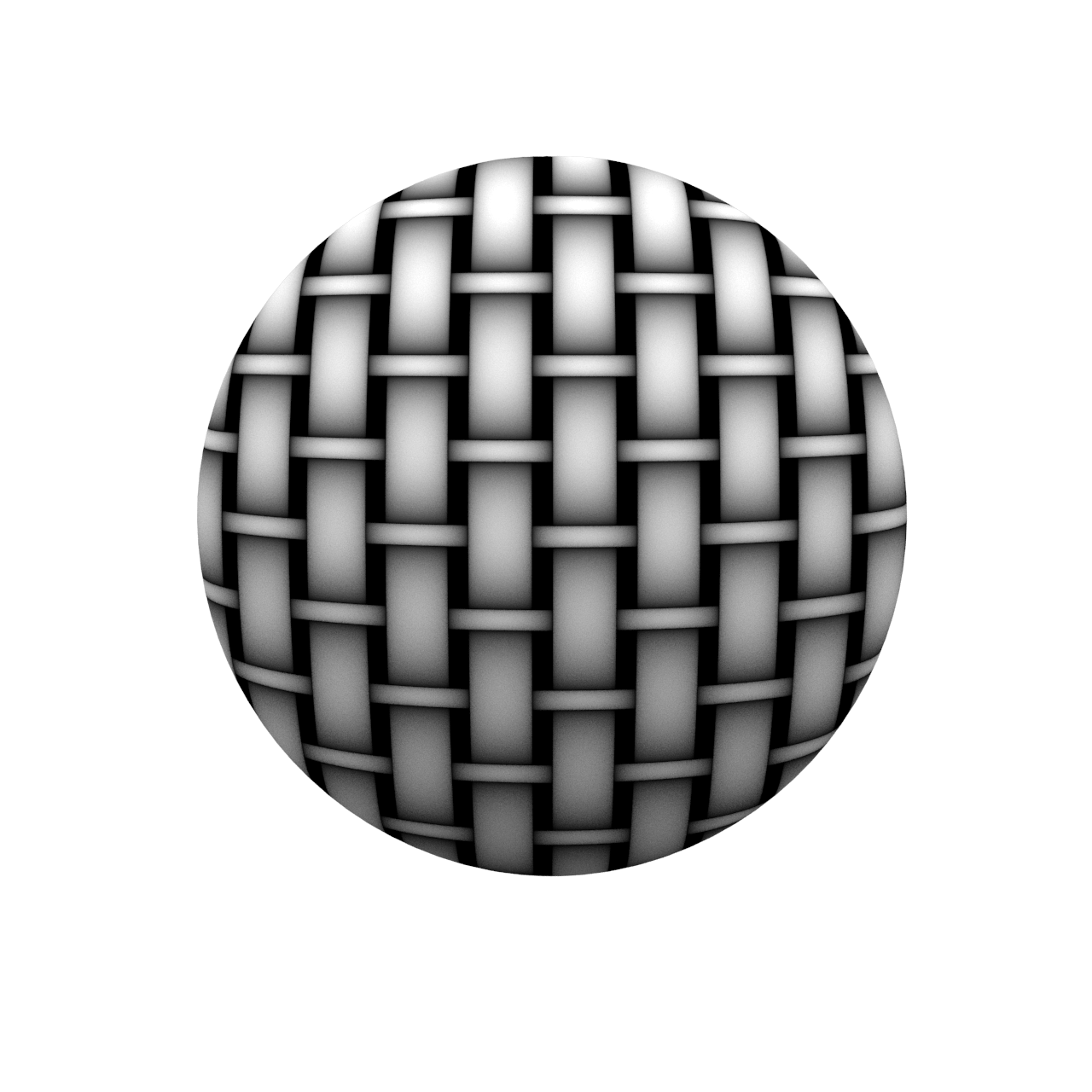
Width U – Controls the horizontal thread width. A texture map can be used for this parameter, as long as the checkbox is enabled.
Width V – Controls the vertical thread width. See the U Width and V Width example below. A texture map can be used for this parameter, as long as the checkbox is enabled.
Random Width – Randomizes the fibers' width based on noise. A texture map can be used for this parameter, as long as the checkbox is enabled.
Example: U Color, V Color and Gap Color

Gap Color
=
Green
U Color:
Pink;
V Color
=
Yellow

Gap Color
=
Black
U Color:
Blue;
V Color
=
Red
Example: U Width and V Width

U Width
= 0.75
,
V Width
= 0.75
U Width
=
0.75,
V Width
=
0.25

U Width
=
0.25,
V Width
=
0.75
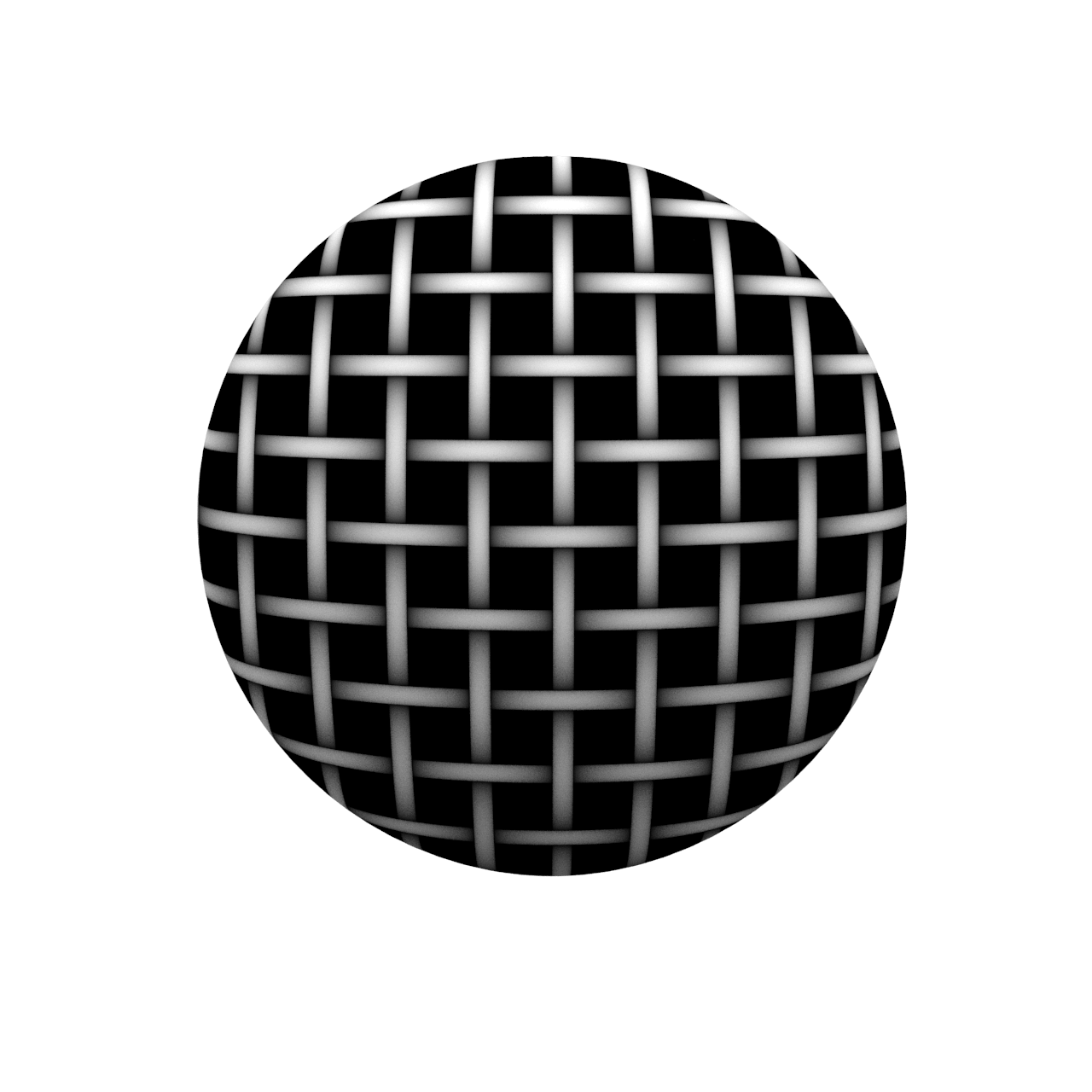
U Width: =
0.25,
V Width
=
0.25
Wave
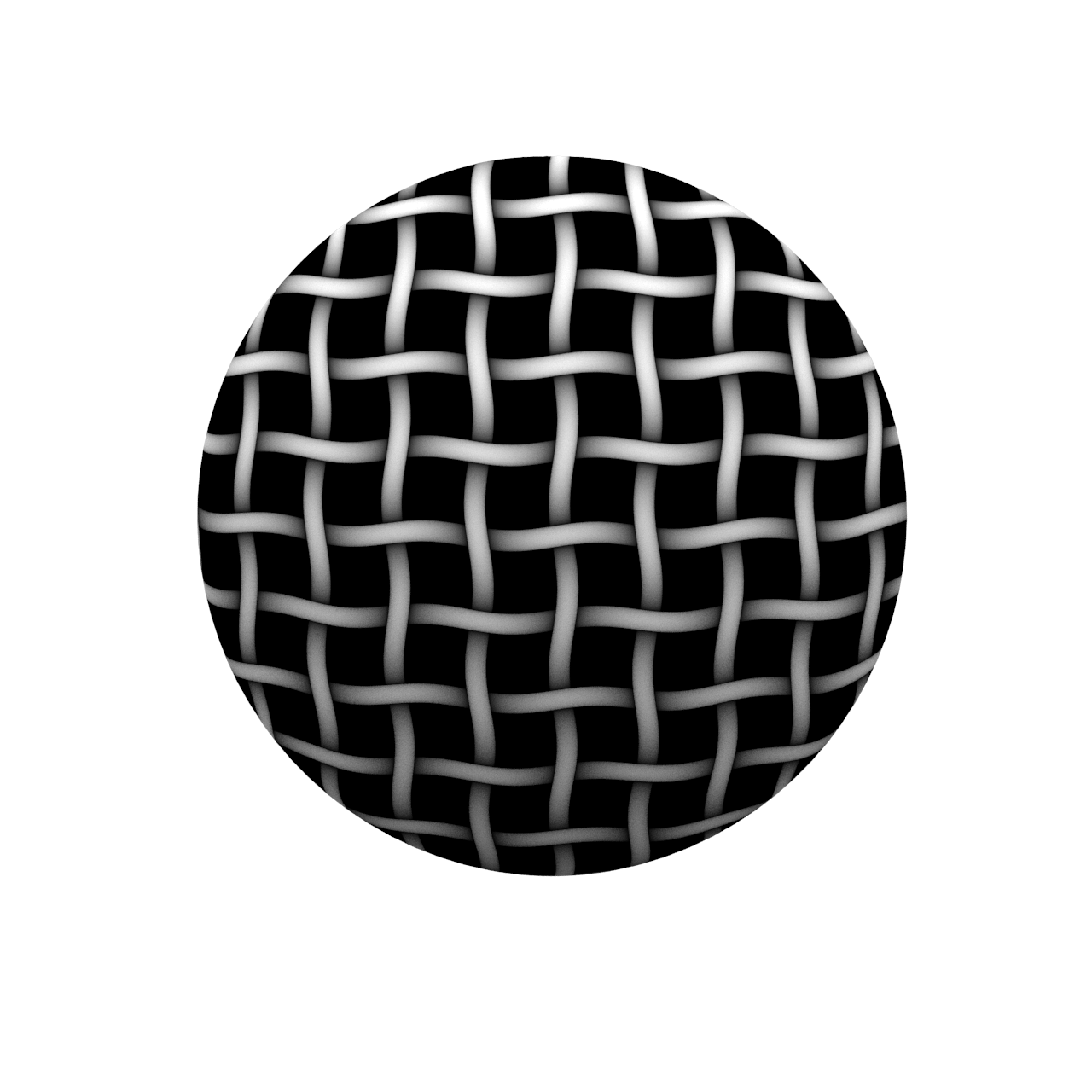
Wave U – Controls the amount of wave in the horizontal direction. A texture map can be used for this parameter, as long as the checkbox is enabled.
Wave V – Controls the amount of wave in the vertical direction. See the U Wave and V Wave example below. A texture map can be used for this parameter, as long as the checkbox is enabled.
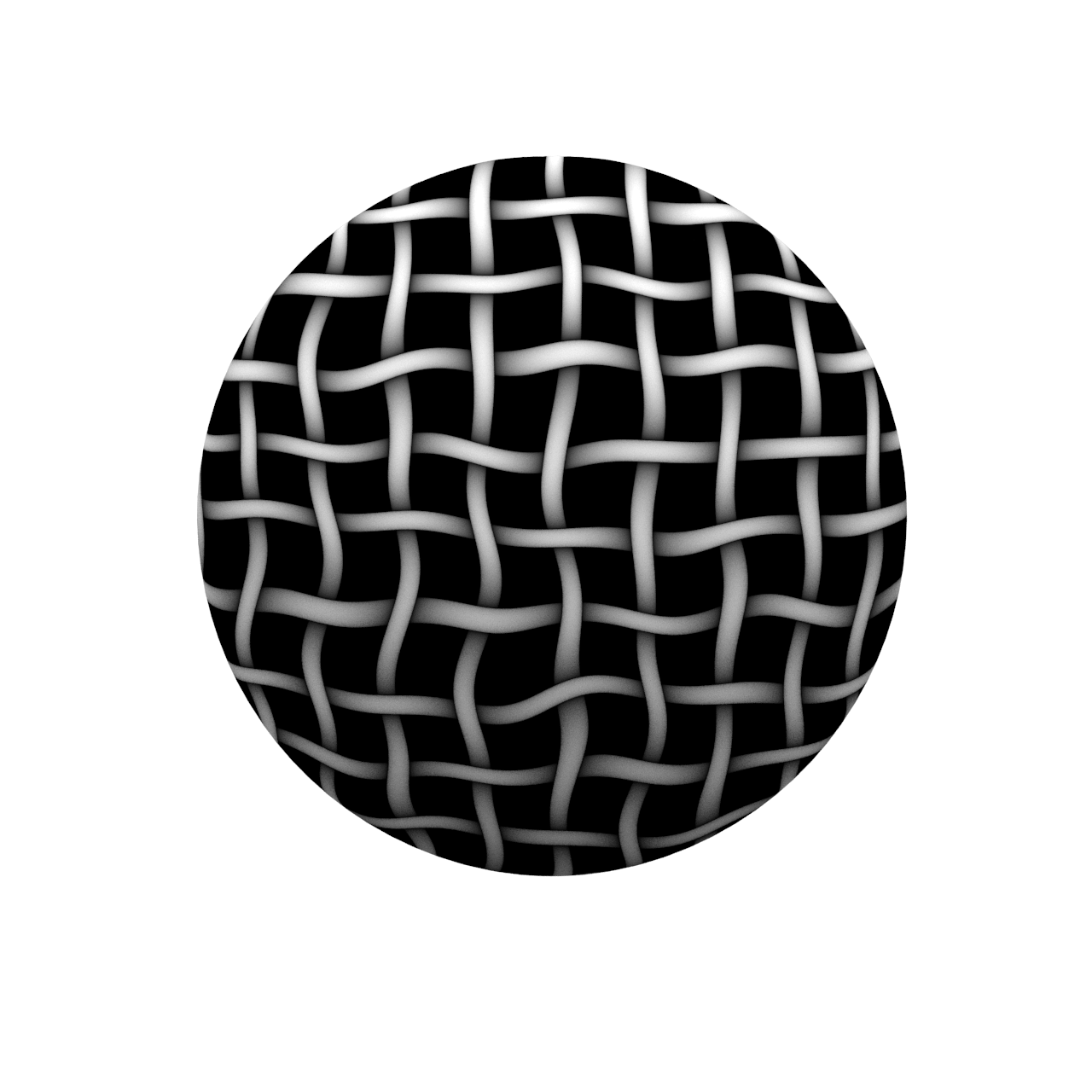
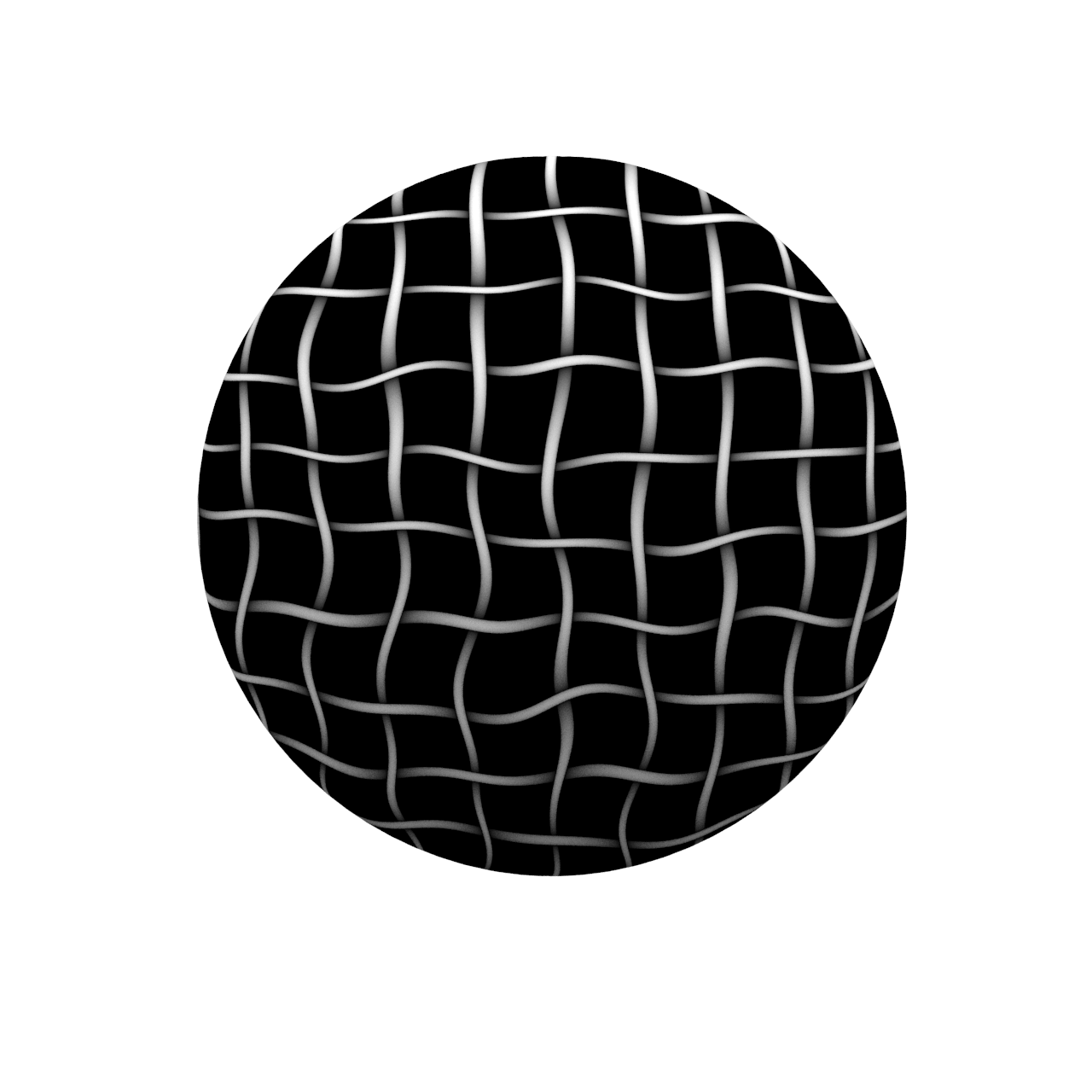
Random Wave – Randomizes the waves based on noise. See the Random Wave example below. A texture map can be used for this parameter, as long as the checkbox is enabled.

Example: U Wave and V Wave
U Wave
=
0,
V Wave
=
0
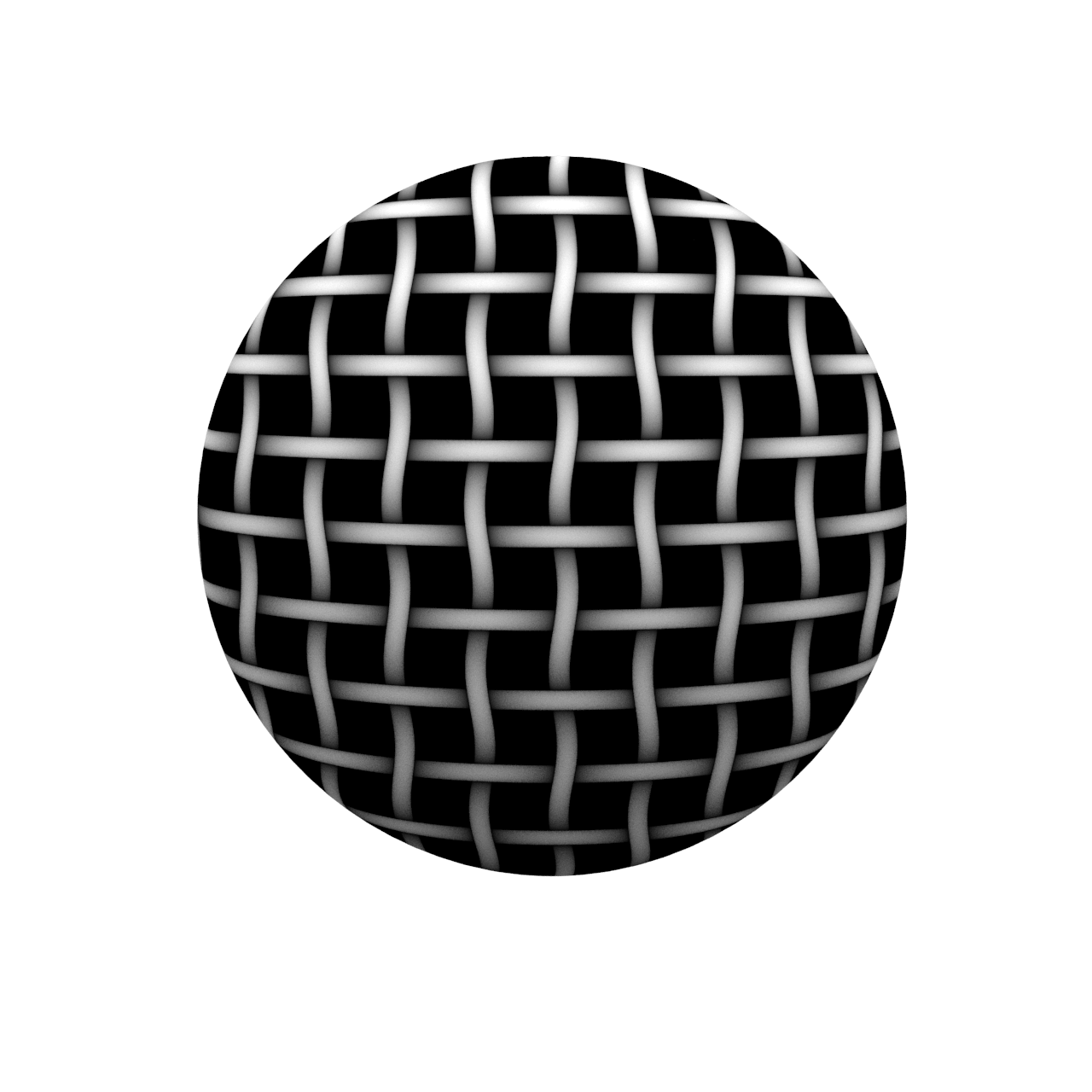
U Wave
=
0.25,
V Wave
=
0
U Wave
=
0.25,
V Wave
=
0.25

U Wave
=
0.25,
V Wave
=
0.25,
Randomness
= 1
Example: Random Wave
Random Wave
=
0
Random Wave
=
0.1
Random Wave
=
0.2
Random Wave
=
0.2,
Width Spread
=
0.25
Color Manipulation
Invert Texture – Inverts the RGB texture values.
Alpha from Intensity – Uses the texture RGB intensity/ luminance as alpha channel.
Color Gain – Corrects the color of the texture by multiplying the the RGB color values in the texture with the RGB color values specified here. A texture map can be assigned here.
Color Offset – Corrects the color of the texture by adding the RGB color values specified here to the RGB color values of the texture. A texture map can be assigned here.
Default Color – Specifies a default color used for polygons with no valid UVs. In case the map is not tiled, specifies a default color that is used outside the texture square. When a texture is selected, it overrides the color as long as the texture checkbox is enabled.

Multipliers
Mode – Specifies the multiplication mode of the colors.
Multiply – The color used for blending is black.
Blend Amount – The color used for blending is the one specified in the color slot.
Gap Color – Blends between a color and a texture, if specified.
Color U – Blends between a color and a texture, if specified.
Color V – Blends between a color and a texture, if specified.

Texture Placement
Type – Controls how the texture is positioned on the geometry.
2D (UV Channel) – The texture uses the object UV coordinates.
Environment – This mode is applicable if the map is connected to an Environment slot or a Dome light.
Texture Remapping – Uses UVW values from a color texture or separate grayscale textures.
Mapping Source – The texture uses an external UV placement source.
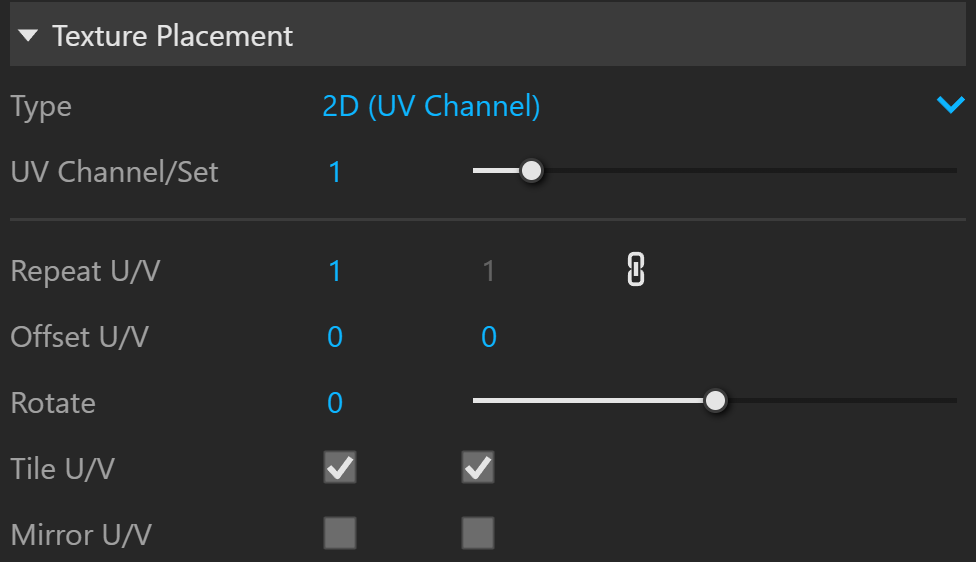
2D (UV Channel)
UV Channel/Set – Specifies the index of the mapping channel data to use. A value of 1 takes the first available channel.
Repeat U/V – Determines how many times the texture is repeated in the 0 to 1 UV square.
Lock U/V Repeat – Locks the U/V Repeat.
Offset U/V – Controls the texture offset in the U and V direction.
Rotate – Rotates the texture (in degrees).
Tile U/V – Tiles the texture in the U and V direction. If the option is disabled, the Default texture color is used outside the 0 to 1 UV square. Default color is found in Parameters > Color Manipulation.
Mirror U/V – Mirrors the texture in the U and V direction separately. The option cuts the texture in the half flipping one side vertically or horizontally. This can be used to avoid seams in-between non-tileable repeated textures.
2D (UV Channel) Parameters
Environment
Mapping – Specifies the type and shape of the texture.
Angular
Cubic
Spherical
Spherical Inverted
Mirror Ball
Screen
Rotate H – Rotates the environment sphere horizontally.
Flip H – Flips the environment sphere horizontally.
Rotate V – Rotates the environment sphere vertically.
Flip V – Flips the environment sphere vertically. This option is active only in Spherical Mapping.
Ground – Enables ground projection of the texture.
Position X/Y/Z – Offsets the ground projection along the X/Y/Z axis.
Radius – Specifies a projection radius. Can be used to control the scale of the projection.
2d Transformation – see 2D (UV channel) parameters.

Environment Parameters
Texture Remapping
Mode – Determines whether a single or multiple textures should be used for U and V texture coordinates remapping.
UV – The Red input texture channel determines the U sampling coordinate. The Green input texture channel determines the V coordinate.
U – The value of this texture determines the U sampling coordinate.
V – The value of this texture determines the V sampling coordinate.

Texture Remapping Parameters
Mapping Source
UV Placement Source – External UV placement source to be used for the texture placement.

Mapping Placement Parameters
Notes
- By putting the same value into the U Wave and V Wave, interesting diagonal effects can be achieved. Similarly loose weaved fabric effect can be produced easily by using higher values in the Width Spread channel.