Which toplighting strategies could work best for your building?
Use this page to:
- Understand how sky conditions affect your choice of toplighting.
- Find toplighting strategies likely to work well in your climate.
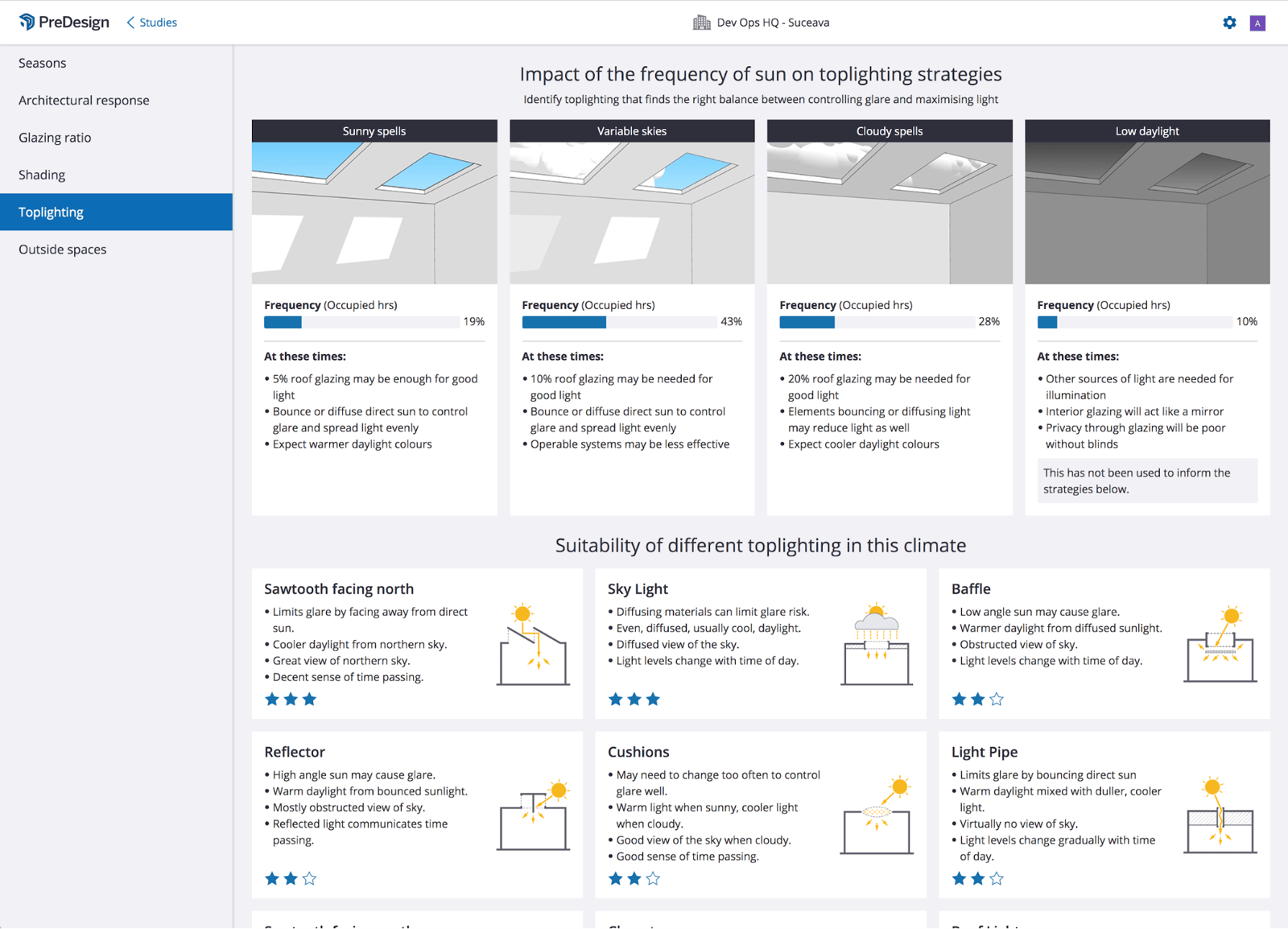
How the climate affects toplighting
The top section shows 4 key conditions recorded in historical climate data during the building's occupied hours.
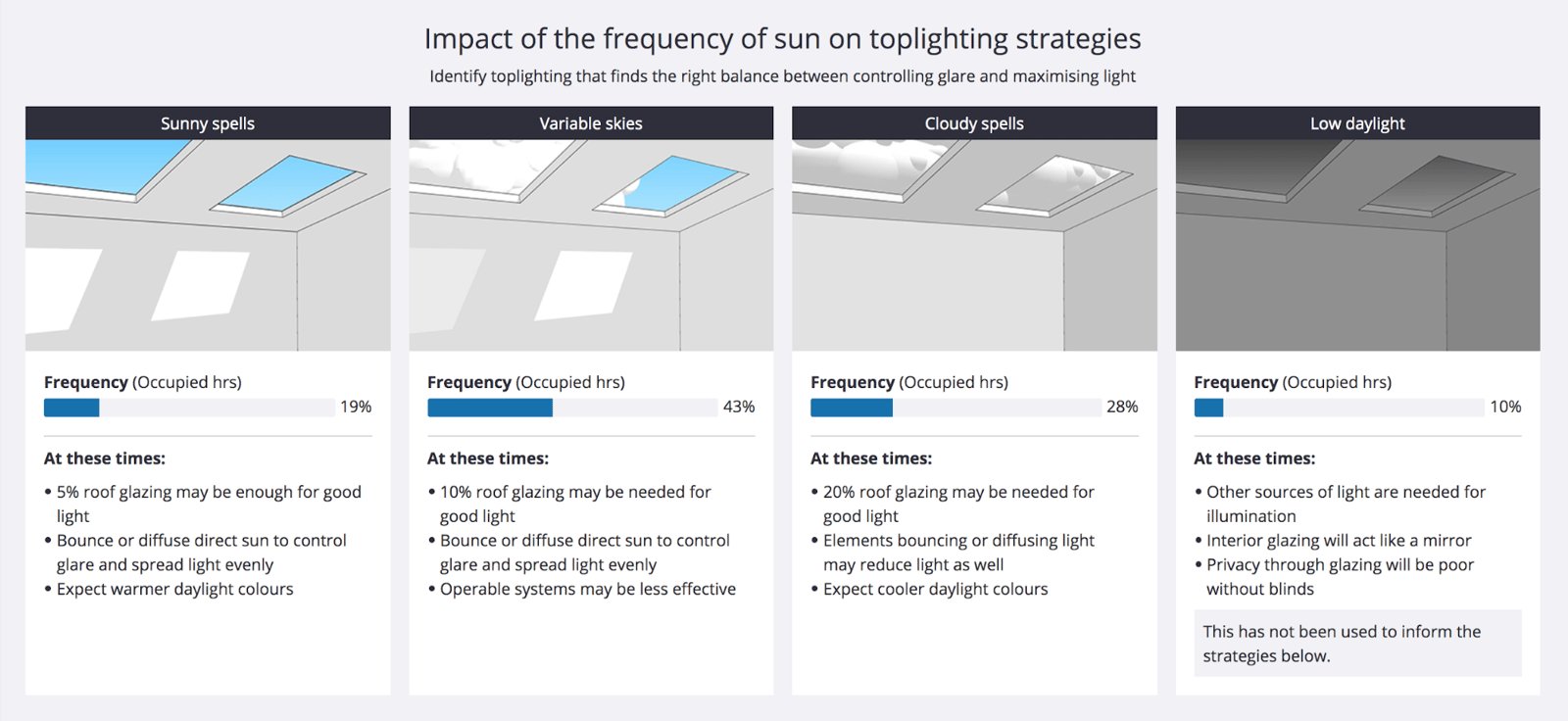
For non-residential projects, this feature groups sky conditions into 4 categories based on sky cover (the amount of cloud reported each hour):
- Sunny spells are periods with at least 3 hours of clear skies in a row. Frequent sunny spells provide long periods of daylight as direct sunlight.
- Cloudy spells are periods with at least 3 hours of heavy cloud in a row. Frequent cloudy spells provide long periods of daylight as diffuse light.
- Variable skies are periods of partial cloud or changes between cloudy and sunny conditions. The sun often moves in and out of cloud.
- Low daylight means there is too little daylight to light a building adequately through toplighting.
How often these conditions occur helps you choose suitable toplighting strategies. For example:
- In climates with frequent sunny spells, light intensity stays high for long periods. Strategies that redirect or bounce light work better in these conditions.
- In climates with frequent cloudy spells, you will likely need more glass and a clearer view of the sky. You may also need glare protection for when the sun comes out.
- In climates with variable skies, strategies that passively manage direct sunlight while letting in enough daylight work well.
Which strategies are most suitable?
Use this section to explore toplighting strategies for your design. It offers ideas rather than a prescribed solution.
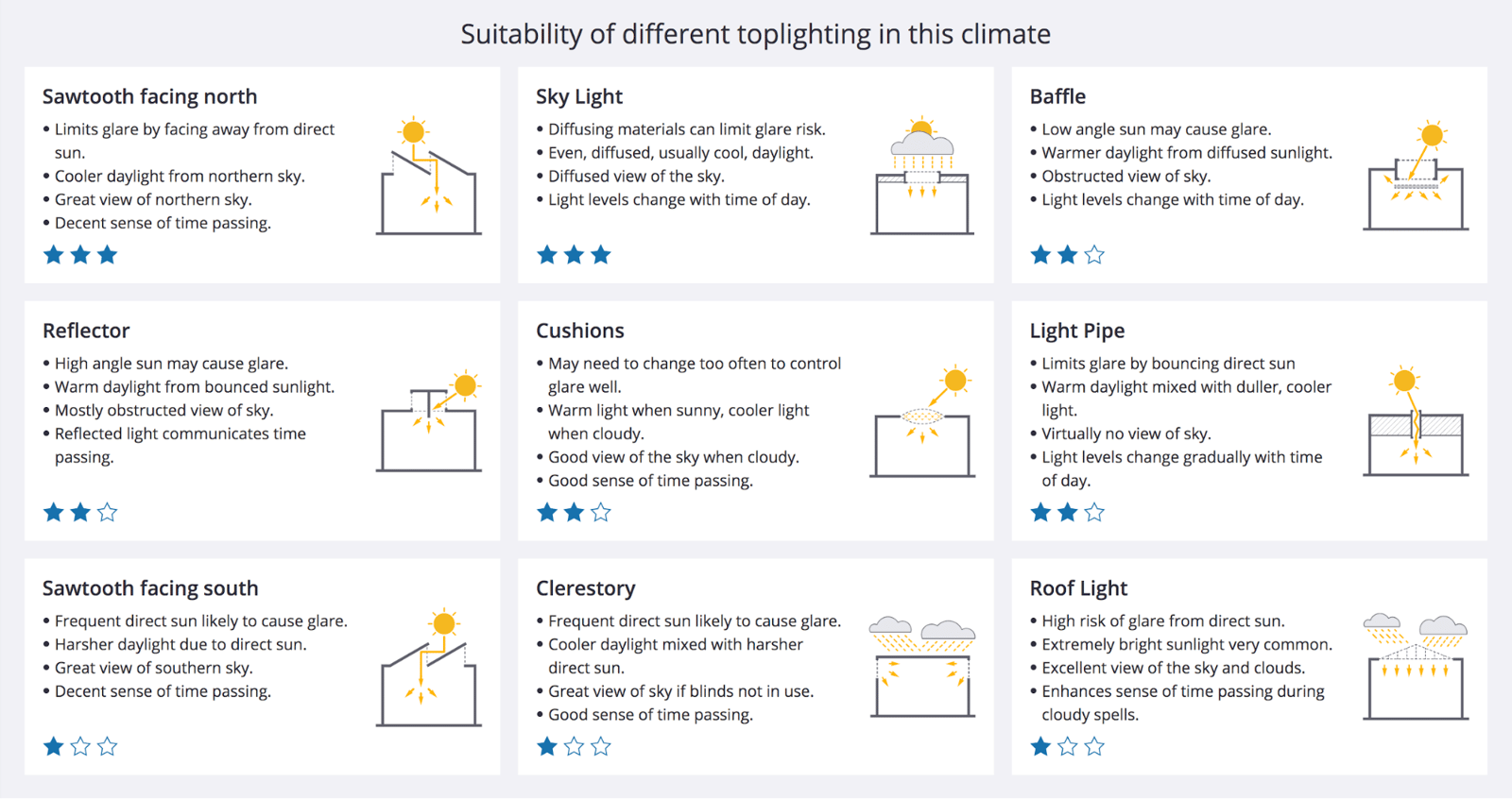
Each card shows a different approach to shading the facade and gives it a star rating:
- 3-stars means the approach could be an excellent solution.
- 2-stars means the approach could be a good solution.
- 1-star means the approach has some potential but may need substantial optimisation or design work.
- 0-stars means the approach is probably best avoided.
Issues you may need to address, especially with lower-rated options, include:
- The approach would let in too much direct sunlight, which is likely to cause glare in these types of buildings.
- The approach may let in less daylight than other strategies.
- The approach may rely on automated controls that need to operate too often.