Which toplighting options have the most potential for this building?
Use this page to:
- Understand how sky conditions affect your choice of toplighting.
- Find toplighting design strategies suited to this climate.
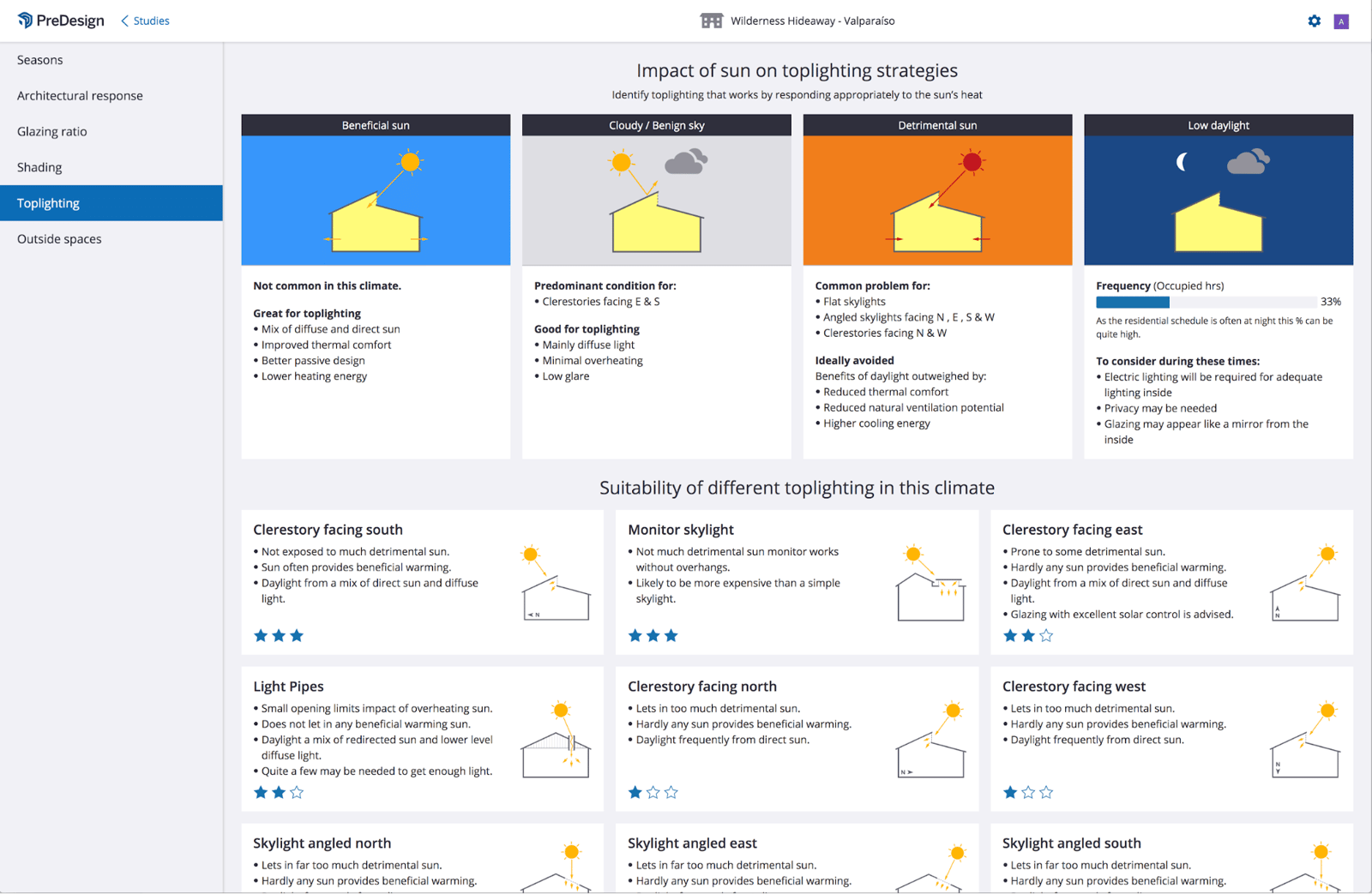
How the climate affects toplighting
The top section shows 4 key conditions during occupied hours, based on historical climate data for your study location.
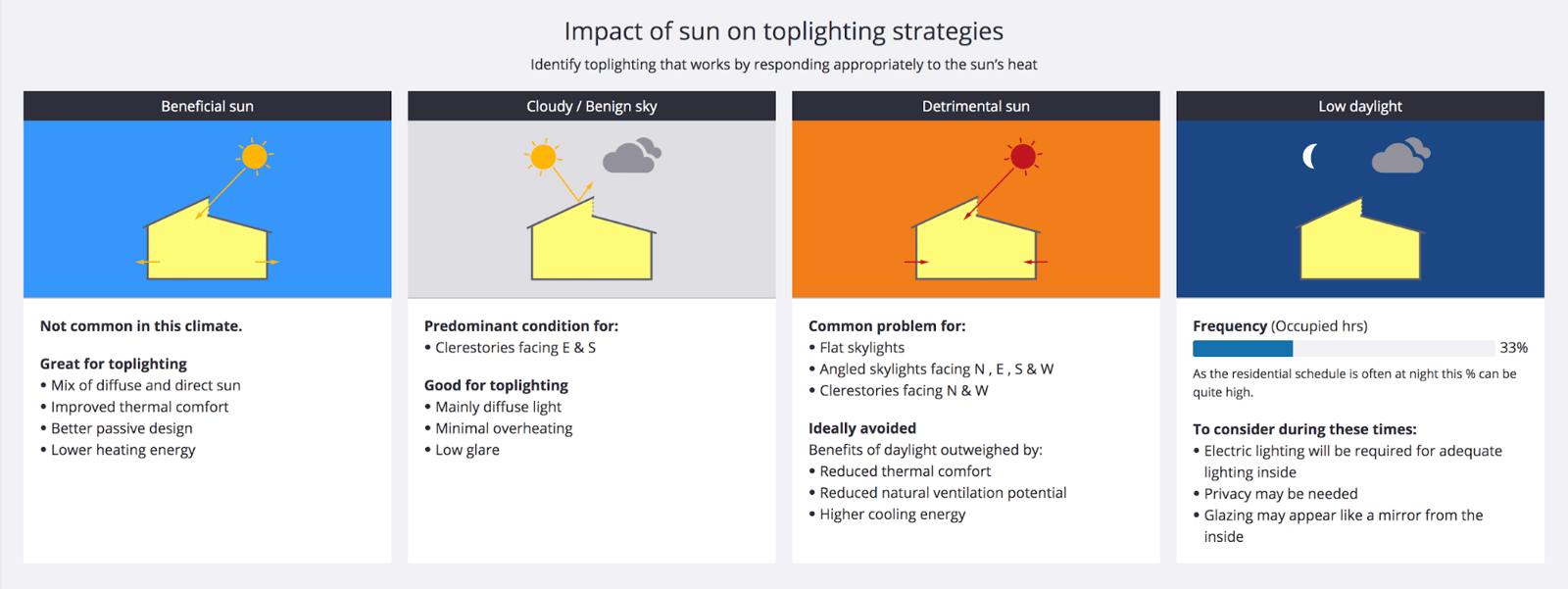
The recommendations favour toplighting that lets in daylight and admits heat when you need it. The aim is to avoid adding daylight that increases cooling energy use or makes active cooling necessary.
For residential projects, this feature groups the climate into 4 broad conditions based on the sunlight each facade receives:
- Beneficial sun means these two conditions occur together:
- Sunlight enters the building.
- The sunlight provides heat when it is helpful.
- Benign / cloudy sky means one of the following conditions occurs:
- Cloud covers the sun, so only diffuse daylight is available.
- The sun does not shine on the surface containing the toplighting glazing.
- Detrimental sun means these two conditions occur together:
- Sunlight enters the building.
- The sunlight provides heat when it is unhelpful.
- Low daylight means it is too dark outside to expect useful daylight through a window or skylight.
How often each surface experiences these conditions helps you choose suitable toplighting strategies.
- Surfaces that mainly receive beneficial sun, benign skies or both are good locations for toplighting glazing.
- Surfaces that mainly receive detrimental sun are less suited to toplighting.
You can reduce these effects through design. Use this information to guide your choices.
Which strategies are most suitable?
Use this section to explore suitable toplighting strategies. It offers design ideas rather than a prescribed solution.
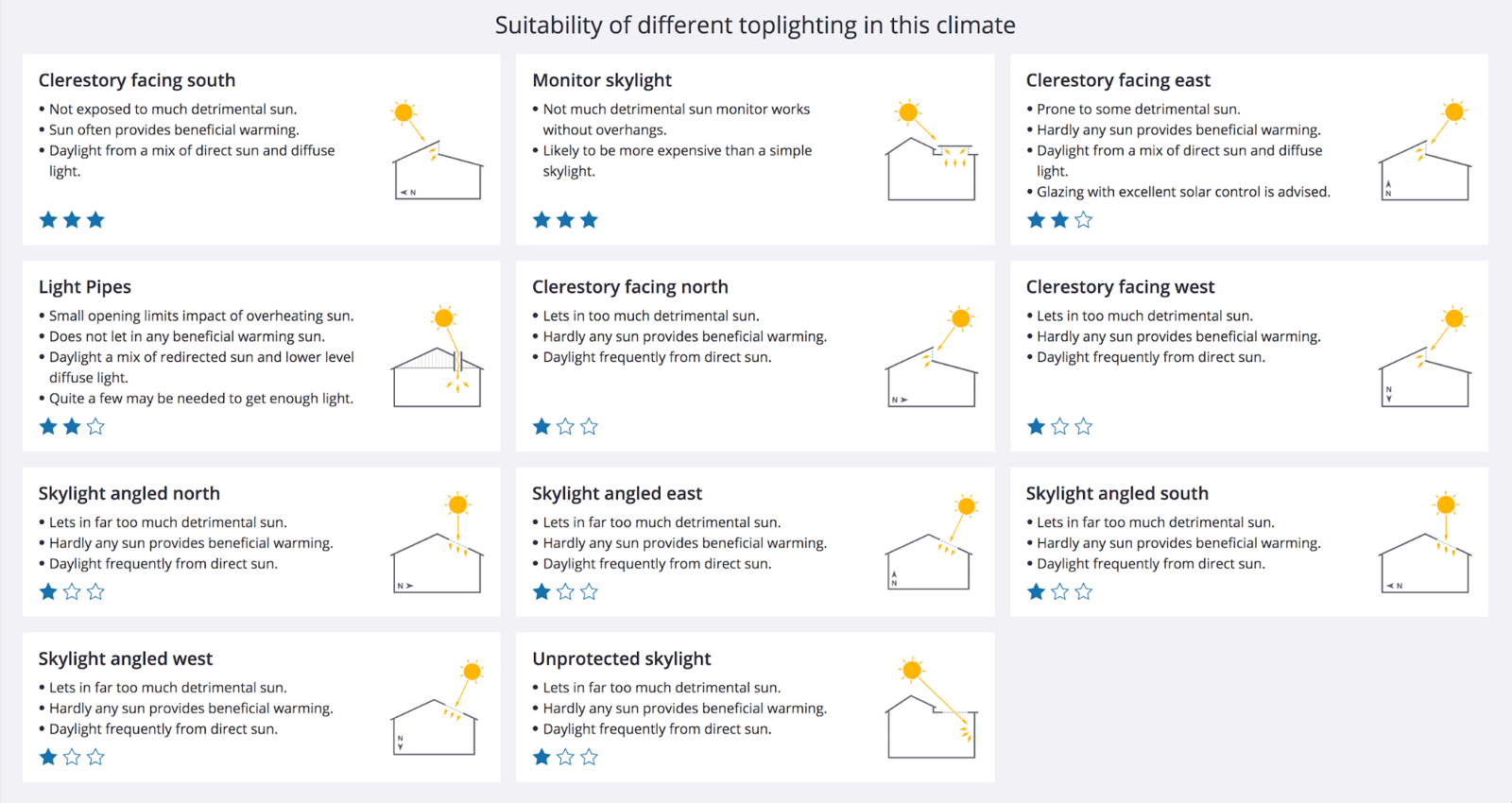
Each card shows a different approach to shading the facade and gives it a star rating:
- Three stars means the solution has the best potential.
- Two stars means the solution has some potential, with issues to address.
- One star means the solution may work but probably has many issues to address.
- Zero stars means the solution is probably best avoided.
Options with lower ratings may have issues such as:
- The space may need air-conditioning where none is currently needed.
- Cooling energy use may rise substantially if the home already has air-conditioning.
- The space may become uncomfortably hot more often than is acceptable.
For example, shading or high-performing glazing may address the issues with some solutions rated one star.