Glazing ratio strategies explained
Understand the glass, frame, shading and solar control options used in SketchUp PreDesign's Glazing Ratio feature:
- Glass types and their assumed properties.
- What "metal - broken", "metal - unbroken" and "non-metal" frames mean.
- What "partial", "substantial" and "extensive" shading mean.
- What "basic", "good" and "great" glazing solar control mean.
More about glazing ratios:
- What the Glazing ratio feature does and how to use it
- How PreDesign determines a recommended glazing ratio
You can find these strategies in the Glazing Ratio feature, as shown below.
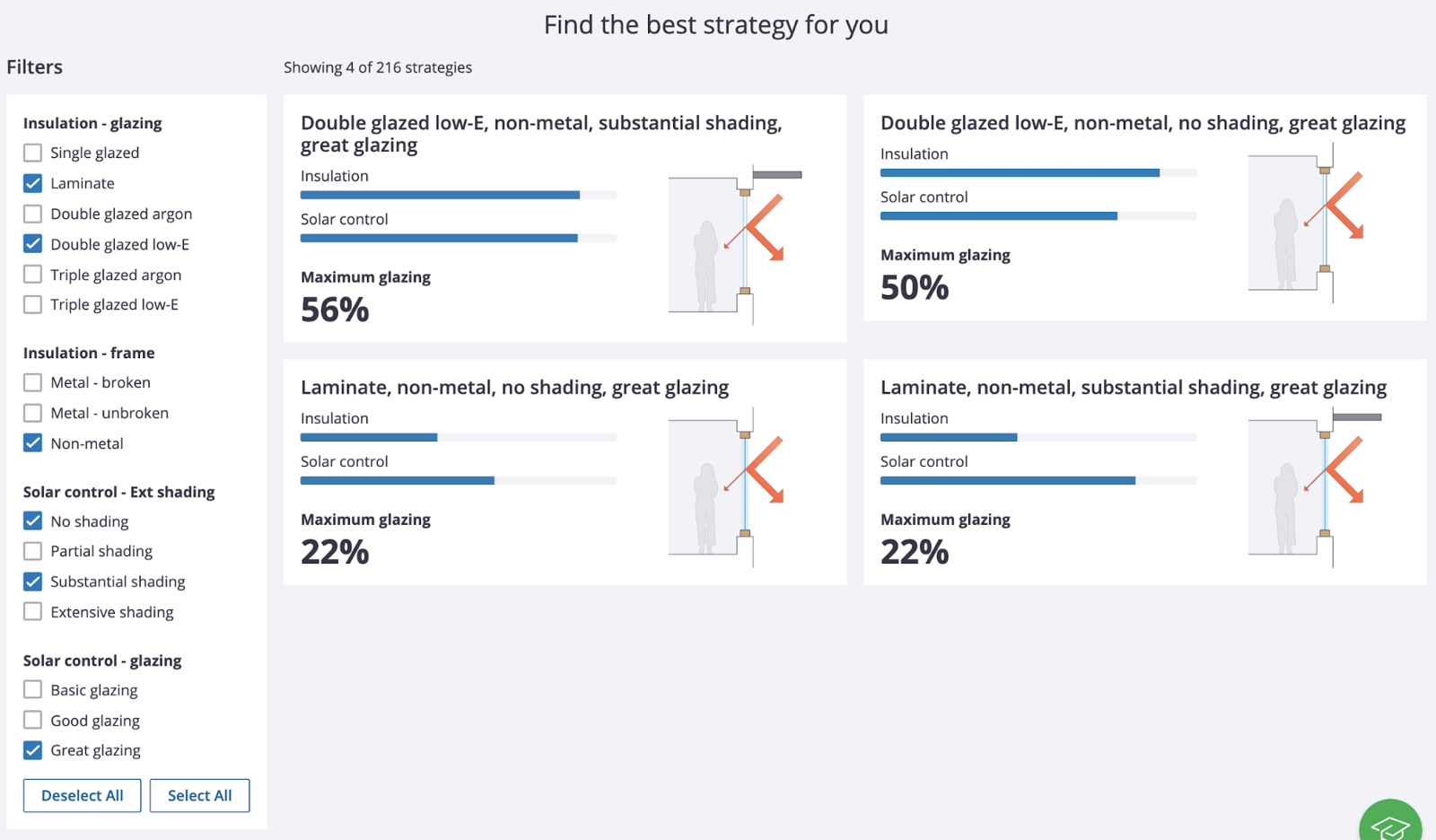
Why the strategy components have generic names
The feature links a recommended maximum amount of glazing for each orientation to facade strategies that may improve performance.
At the predesign stage, you may not know which products you will use, but you may need to set a budget. These strategies help you estimate how different amounts of glazing on each orientation affect cost and appearance.
Use the feature to identify what your target glazing ratio needs. You can then use this information to write outline facade requirements for each orientation.
How the facade components are grouped
The feature divides the facade assembly into 4 elements.
These elements affect the glazing assembly's insulation:
- Glazing type
- Frame type
These elements affect the glazing assembly's solar control:
- Shading type
- Glazing solar control
Why isn't infiltration included?
Infiltration is air leaking through the facade into and out of a building. It can contribute to heat gain, heat loss and humidity problems. The amount of glazing generally does not determine the infiltration rate, so the feature does not include it.
How the assembly is modelled
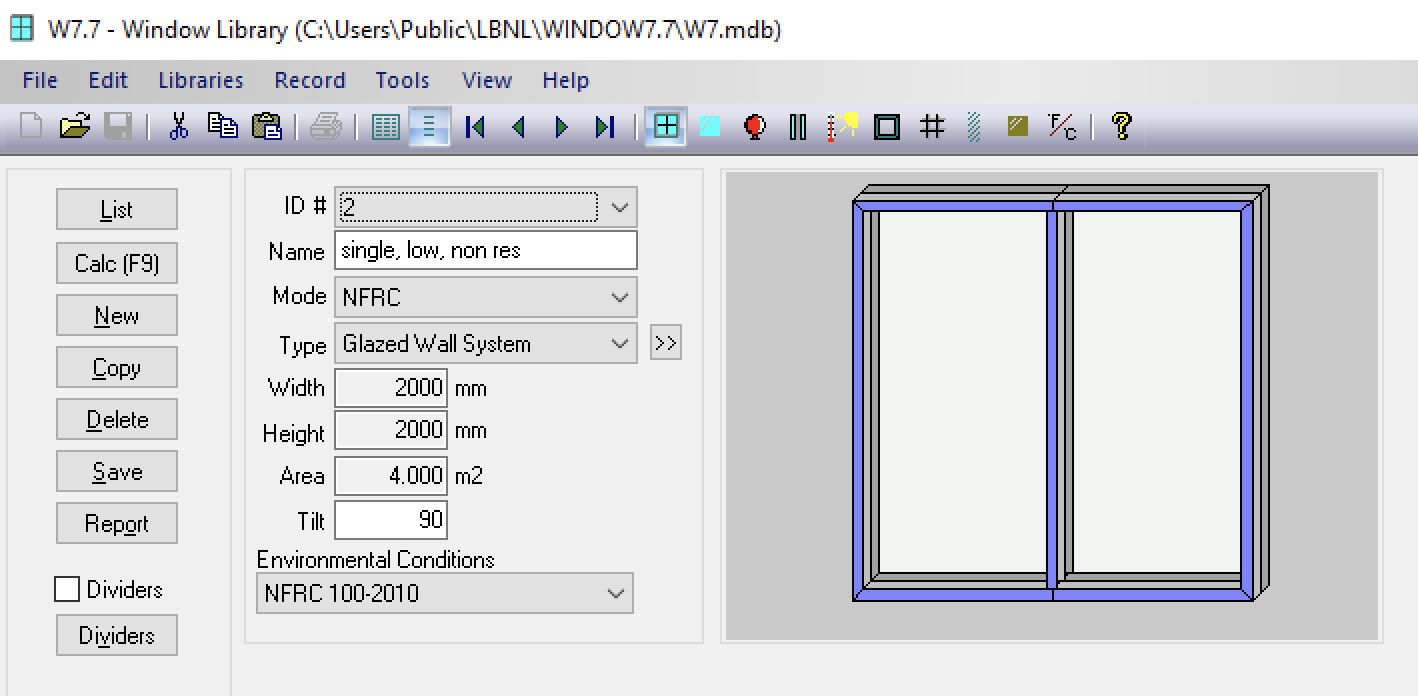
The assemblies use real products to represent how a design might work. Each assembly includes a frame. Its properties were calculated using LBNL's Window 7.7 software.
Glazing types
The feature uses 6 glazing types. The table shows their assumed properties and the glazing each type can represent at the predesign stage.
Strategy | Description | Centre-of-glass U-value used in the calculation | Can represent |
Single Glazed | A single pane of 6mm glass. | 5.6 | Any single pane of glass, perspex or plastic, at any thickness. Laminated glass without an internal low-e layer. |
Laminate | Two adjacent 6mm glass panes with a low-e coating between them. | 5.0 | Any laminated glass with an internal low-e layer. |
Double Glazed Argon | Two 6mm glass panes with a 12mm argon-filled gap between them. | 2.5 | Any double glazed unit with any type of gap and no low-e coating. |
Double Glazed Low-e | Two 6mm glass panes with a 12mm gap and a low-e coating on surface 2. | 1.7 | Any double glazed unit with any type of gap and a low-e coating. |
Triple Glazed Argon | Three 6mm glass panes with a 12mm argon-filled gap between each pane. | 1.6 | Any triple glazed unit with any type of gap. |
Triple Glazed Low-e | Three 6mm glass panes with a 12mm gap and a low-e coating on surface 2. | 1 | Any triple glazed unit with a low-e coating. |
Frame types
PreDesign uses 3 frame types. The table shows their assumed properties and the frames each type can represent at the predesign stage.
Strategy | Frame used in the calculation | Frame material U-value | Can represent |
Unbroken Metal | An aluminium window frame without a thermal break. | 15 | Any metal window frame without a thermal break. |
Broken Metal | An aluminium window frame with a thermal break. | 5.6 | Any metal window frame with a thermal break. |
Non-metal | A PVC window frame. | 1.7 | Any plastic, wood or composite window frame made from a non-conductive material. |
Shading types
PreDesign uses 4 shading types. The table shows the assumptions used for each type and where to find examples.
Strategy | Shading used in the calculation | Where to find examples |
No Shading | The glazing has no external shading. | The shading feature shows the percentage of sun that causes overheating (detrimental sun) blocked by each strategy for each orientation. See below. |
Partial Shading | The glazing has a shading system that blocks at least 25% of detrimental sun. | |
Substantial Shading | The glazing has a shading system that blocks at least 50% of detrimental sun. | |
Extensive Shading | The glazing has a shading system that blocks at least 75% of detrimental sun. |
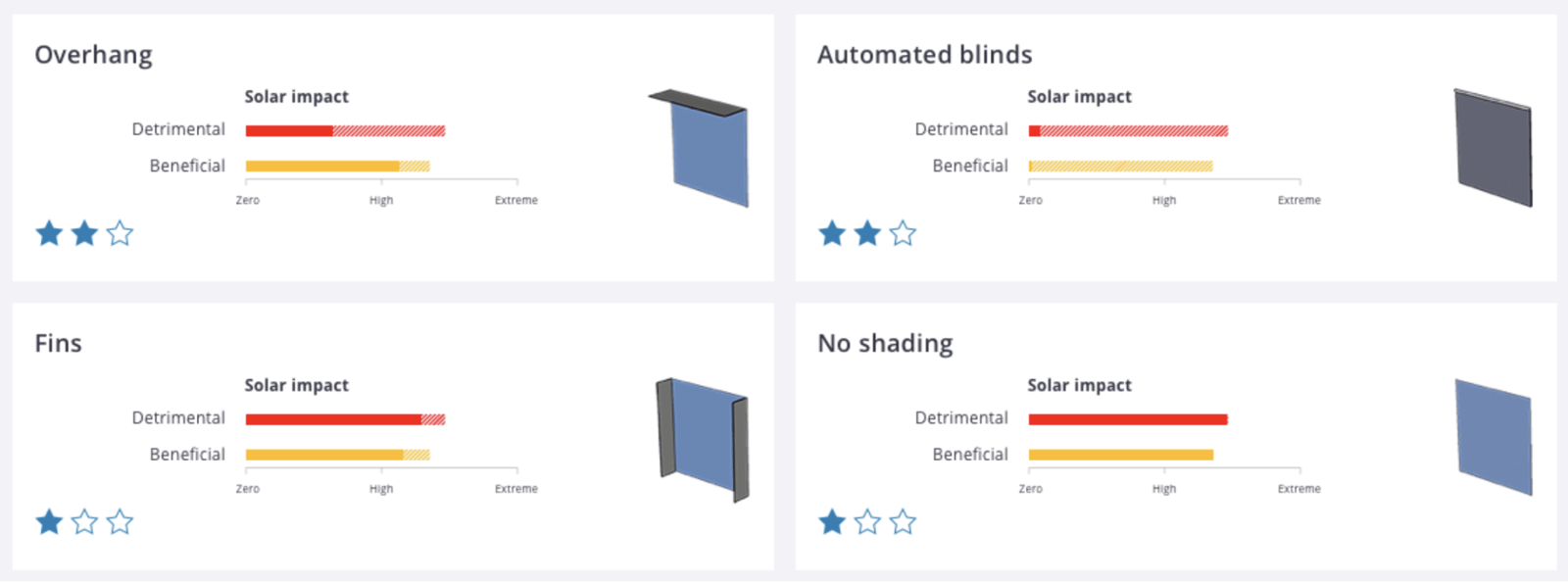
The image below shows 4 shading strategies for the south facade of a building in Boulder, Colorado.
- Automated Blinds block more than 75% of overheating sun, so this counts as extensive shading for this facade.
- Overhang blocks over 50% of overheating sun, so this counts as substantial shading.
- Fins and No shading block less than 25% of overheating sun, so both count as no shading.
Glazing solar control types
PreDesign uses 3 types of glazing solar control.
Glazing Solar Control is assessed relative to the glazing type. Single glazing with "great" solar control, likely a heavy tint or frit, still performs worse than a low-e double glazed unit with a good low-e coating and "basic" solar control.
This makes each solar control rating meaningful for the glazing unit as a whole.
The table shows the assumed SHGC (solar heat gain coefficient) for each glass type's "basic, good, best" option with a broken metal frame. Non-metal frames have slightly lower SHGC values because their frames are thicker. Unbroken metal frames have higher values.
Assumed centre-of-glass solar heat gain coefficient (SHGC) | |||
Glazing type | Basic | Good | Great |
Single Glazed | 0.77 | 0.57 | 0.48 |
Laminate | 0.66 | 0.53 | 0.34 |
Double Glazed | 0.69 | 0.47 | 0.38 |
Double Glazed low-e | 0.41 | 0.28 | 0.22 |
Triple Glazed | 0.57 | 0.41 | 0.32 |
Triple Glazed low-e | 0.29 | 0.23 | 0.21 |
How you achieve an SHGC depends on the glass type. Tinting, low-e coatings and fritting can all reduce the solar heat gain coefficient.
Lookup table
Strategy name | Glazing type | Glazing performance | Frame | Proposed glazing assembly U-value | Proposed effective assembly SHGC |
Single Glazed | Single | Basic | Metal (broken) | 5.6 | 0.77 |
Single Glazed | Single | Good | Metal (broken) | 5.5 | 0.57 |
Single Glazed | Single | Great | Metal (broken) | 5.5 | 0.48 |
Laminate | Laminate | Basic | Metal (broken) | 5.1 | 0.66 |
Laminate | Laminate | Good | Metal (broken) | 5.1 | 0.53 |
Laminate | Laminate | Great | Metal (broken) | 5.1 | 0.34 |
Double Glazed Argon | Double Glazed Argon | Basic | Metal (broken) | 3.1 | 0.69 |
Double Glazed Argon | Double Glazed Argon | Good | Metal (broken) | 3 | 0.47 |
Double Glazed Argon | Double Glazed Argon | Great | Metal (broken) | 3 | 0.38 |
Low E Double Glazed | Low E Double Glazed | Basic | Metal (broken) | 2.4 | 0.41 |
Low E Double Glazed | Low E Double Glazed | Good | Metal (broken) | 2.4 | 0.28 |
Low E Double Glazed | Low E Double Glazed | Great | Metal (broken) | 2.4 | 0.22 |
Triple Glazed Argon | Triple Glazed Argon | Basic | Metal (broken) | 2.3 | 0.57 |
Triple Glazed Argon | Triple Glazed Argon | Good | Metal (broken) | 2.3 | 0.41 |
Triple Glazed Argon | Triple Glazed Argon | Great | Metal (broken) | 2.3 | 0.32 |
Low E Triple Glazed | Low E Triple Glazed | Basic | Metal (broken) | 1.9 | 0.32 |
Low E Triple Glazed | Low E Triple Glazed | Good | Metal (broken) | 1.9 | 0.26 |
Low E Triple Glazed | Low E Triple Glazed | Great | Metal (broken) | 1.9 | 0.21 |
Single Glazed | Single | Basic | Non-metal | 4.9 | 0.73 |
Single Glazed | Single | Good | Non-metal | 4.9 | 0.53 |
Single Glazed | Single | Great | Non-metal | 4.9 | 0.44 |
Laminate | Laminate | Basic | Non-metal | 4.4 | 0.61 |
Laminate | Laminate | Good | Non-metal | 4.4 | 0.49 |
Laminate | Laminate | Great | Non-metal | 4.4 | 0.31 |
Double Glazed Argon | Double Glazed Argon | Basic | Non-metal | 2.5 | 0.65 |
Double Glazed Argon | Double Glazed Argon | Good | Non-metal | 2.5 | 0.43 |
Double Glazed Argon | Double Glazed Argon | Great | Non-metal | 2.5 | 0.35 |
Low E Double Glazed | Low E Double Glazed | Basic | Non-metal | 1.7 | 0.37 |
Low E Double Glazed | Low E Double Glazed | Good | Non-metal | 1.7 | 0.25 |
Low E Double Glazed | Low E Double Glazed | Great | Non-metal | 1.7 | 0.2 |
Triple Glazed | Triple Glazed | Basic | Non-metal | 1.8 | 0.53 |
Triple Glazed | Triple Glazed | Good | Non-metal | 1.8 | 0.37 |
Triple Glazed | Triple Glazed | Great | Non-metal | 1.8 | 0.29 |
Low E Triple Glazed | Low E Triple Glazed | Basic | Non-metal | 1.4 | 0.29 |
Low E Triple Glazed | Low E Triple Glazed | Good | Non-metal | 1.4 | 0.23 |
Low E Triple Glazed | Low E Triple Glazed | Great | Non-metal | 1.4 | 0.18 |
Single Glazed | Single | Basic | Metal (not broken) | 6.9 | 0.83 |
Single Glazed | Single | Good | Metal (not broken) | 6.8 | 0.62 |
Single Glazed | Single | Great | Metal (not broken) | 6.8 | 0.54 |
Laminate | Laminate | Basic | Metal (not broken) | 6.4 | 0.71 |
Laminate | Laminate | Good | Metal (not broken) | 6.4 | 0.58 |
Laminate | Laminate | Great | Metal (not broken) | 6.4 | 0.4 |
Double Glazed Argon | Double Glazed Argon | Basic | Metal (not broken) | 4.3 | 0.75 |
Double Glazed Argon | Double Glazed Argon | Good | Metal (not broken) | 4.3 | 0.52 |
Double Glazed Argon | Double Glazed Argon | Great | Metal (not broken) | 4.3 | 0.43 |
Low E Double Glazed | Low E Double Glazed | Basic | Metal (not broken) | 3.5 | 0.41 |
Low E Double Glazed | Low E Double Glazed | Good | Metal (not broken) | 3.5 | 0.33 |
Low E Double Glazed | Low E Double Glazed | Great | Metal (not broken) | 3.4 | 0.28 |
Triple Glazed | Triple Glazed | Basic | Metal (not broken) | 3.6 | 0.62 |
Triple Glazed | Triple Glazed | Good | Metal (not broken) | 3.6 | 0.46 |
Triple Glazed | Triple Glazed | Great | Metal (not broken) | 3.6 | 0.38 |
Low E Triple Glazed | Low E Triple Glazed | Basic | Metal (not broken) | 3.2 | 0.38 |
Low E Triple Glazed | Low E Triple Glazed | Good | Metal (not broken) | 3.2 | 0.31 |
Low E Triple Glazed | Low E Triple Glazed | Great | Metal (not broken) | 3.2 | 0.26 |